Texas Barbecue: The Basics - Best BBQ Techniques
Blog
Published: 12 Mar 2026
Whether you’re a backyard beginner or refining your pitmaster skills, these best BBQ techniques will help you elevate your BBQ game. Even if you’re new to exploring Texas BBQ techniques or other regional BBQ styles, learning some BBQ Basics will be fundamental and nice to revisit to perfect your barbecue skills.
At Dickey’s Barbecue, we know what goes into Texas BBQ traditions since we’ve been doing it for 85 years! Here is a basic and quick rundown of the basics so that you know what kind of love and attention goes into every bit of our delicious BBQ.
Understanding Regional BBQ Styles
Before diving into what we think are the best BBQ techniques for beginning pit masters, it’s important to recognize that barbecue varies widely across the United States. Each region has its own flavor profiles, meats, and cooking methods. Some regions swear by vinegar, some by mustard, wet seasoning, dry rubs, and the list goes on and on. Arguably, every region says they have the best BBQ because of that regional barbecue pride. Now, we might be a little biased being a local Texas BBQ spot serving Legit. Texas. Barbecue, but Texas BBQ really is the best in our opinion. With that being said, some of the basics can vary based on region. Understanding that and knowing that flavor and preference is more subjective than saying any one way is the right way, is something to keep in mind when we discuss the basics. For a larger discussion on Regional BBQ Styles, click here!
Now that we have a general understanding of Regional BBQ styles, let’s talk more about basic BBQ techniques.
Low and Slow: The Golden Rule of BBQ
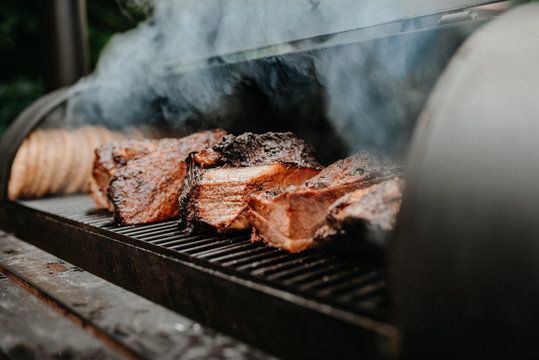
No matter the region, one rule (almost always) stays consistent: low and slow cooking produces the best results for smoking meats. Barbecue isn’t about high heat and quick sears. Instead, it’s about maintaining steady temperatures—usually between 225°F and 275°F—for several hours. This is a tried-and-true Texas BBQ technique and one that Dickey’s Barbecue Pit uses.
Why low and slow? Slow cooking allows collagen and connective tissue to break down gradually, resulting in tender, juicy meat. This makes it one of the top Texas BBQ techniques to follow. It also gives smoke time to infuse flavor and create that prized outer crust known as bark to give your smoked meats a deep flavor you just can’t fake.
Temperature control is also a critical BBQ technique, especially in regards to cooking over a long period of time. Use a reliable digital thermometer and avoid constantly opening the smoker lid, which causes heat fluctuations. You have to trust your pit and your thermometer to do their job. Consistency is key to mastering any BBQ technique and impatience is the downfall. Don’t rush the cooking process but also don’t interrupt it with constantly checking your meat.
The Importance of Resting
Resting is so important but it is also an easy step for people to miss. In our opinion, it is not an optional step to the process. It’s an important step for a few reasons:
Let’s break it down by reason next.
Juice Redistribution
We talked about cooking low and slow early which breaks down collagen and connective tissues slowly, but in addition, when meat cooks, muscle fibers righten. When those fibers righten, it pushes moisture toward the center of the piece of meat. Now, if you slice into the cooked meat too early, all those juices can be lost to your cutting board instead of remaining in your barbecue to keep it moist and delicious. Imagine spending hours to smoke a lovely brisket, only to dry it out by not waiting to slice. Rest it and get all that juice redistributed and also get a better texture to each bite as well! Slice too early and watch your heard earned moisture leak all the way out of your meat. Brisket is particularly unforgiving. Look out for our next blog to see the best practices for smoking a brisket.
A properly rested brisket will feel relaxed and supple. When sliced, it should hold together but still bend gently over your finger.
Resting isn’t wasted time — it’s the final step in cooking.
Carryover Cooking
Meat continues to cook even after it’s removed from heat which is called carryover cooking. Internal temperatures can rise anywhere from 5–15 degrees depending on the size of the cut so it is important to keep this in mind during your cooking process/timing. If you wait until your meat is at temp to pull it away from the heat, you run the chance of overcooking during the resting time. A good basic BBQ move that smart pitmasters use is to remove your meat slightly before it hits the final desired temperature. That way, you compensate for that carryover cooking.
Common BBQ Mistakes
Even experienced pitmasters can make mistakes. Since you’ve heard some of the basics of the Best BBQ techniques to follow, here are some of the common BBQ mistakes that can happen.
Opening the Smoker Too Often
Smoking meats require consistent temp control. Each time you open the lid to your smoker, heat escapes. This will increase your cook time but also creates inconsistent heat which can affect tenderness and bark development.
If you’re looking, you’re not cooking.
Trust your process and keep the lid closed whenever possible.
Relying Only on Time Instead of Internal Temperature
BBQ is done when it’s done — not when the clock says so. Temperature can sometimes mean more than cooking time. For example, 2 briskets of the same weight can take completely different times to cook/be done. Always cook to temp instead of time. Time is a suggestion or starting framework, but temperature is a non-negotiable.
Not Using a Thermometer
Using a thermometer is non-negotiable. A reliable meat thermometer removes guesswork and prevents overcooking or undercooking.
Cooking without one is gambling.
Skipping the Rest Period
We mentioned this early, resting is important! Impatience is one of the biggest reasons for dry meat. Resting completes the cooking process and preserves moisture.
Skipping it can undo hours of your hard work and patience.
We hope that you found these to be the Best BBQ Techniques to get you started! Keep tuning in to our blog for more useful tips, tricks, and all things barbecue!
At Dickey’s Barbecue, we know what goes into Texas BBQ traditions since we’ve been doing it for 85 years! Here is a basic and quick rundown of the basics so that you know what kind of love and attention goes into every bit of our delicious BBQ.
Understanding Regional BBQ Styles
Before diving into what we think are the best BBQ techniques for beginning pit masters, it’s important to recognize that barbecue varies widely across the United States. Each region has its own flavor profiles, meats, and cooking methods. Some regions swear by vinegar, some by mustard, wet seasoning, dry rubs, and the list goes on and on. Arguably, every region says they have the best BBQ because of that regional barbecue pride. Now, we might be a little biased being a local Texas BBQ spot serving Legit. Texas. Barbecue, but Texas BBQ really is the best in our opinion. With that being said, some of the basics can vary based on region. Understanding that and knowing that flavor and preference is more subjective than saying any one way is the right way, is something to keep in mind when we discuss the basics. For a larger discussion on Regional BBQ Styles, click here!
Now that we have a general understanding of Regional BBQ styles, let’s talk more about basic BBQ techniques.
Low and Slow: The Golden Rule of BBQ
No matter the region, one rule (almost always) stays consistent: low and slow cooking produces the best results for smoking meats. Barbecue isn’t about high heat and quick sears. Instead, it’s about maintaining steady temperatures—usually between 225°F and 275°F—for several hours. This is a tried-and-true Texas BBQ technique and one that Dickey’s Barbecue Pit uses.
Why low and slow? Slow cooking allows collagen and connective tissue to break down gradually, resulting in tender, juicy meat. This makes it one of the top Texas BBQ techniques to follow. It also gives smoke time to infuse flavor and create that prized outer crust known as bark to give your smoked meats a deep flavor you just can’t fake.
Temperature control is also a critical BBQ technique, especially in regards to cooking over a long period of time. Use a reliable digital thermometer and avoid constantly opening the smoker lid, which causes heat fluctuations. You have to trust your pit and your thermometer to do their job. Consistency is key to mastering any BBQ technique and impatience is the downfall. Don’t rush the cooking process but also don’t interrupt it with constantly checking your meat.
The Importance of Resting
Resting is so important but it is also an easy step for people to miss. In our opinion, it is not an optional step to the process. It’s an important step for a few reasons:
- Juice Redistribution
- Why slicing too early ruins your smoked meat
- Carryover Cooking
Let’s break it down by reason next.
Juice Redistribution
We talked about cooking low and slow early which breaks down collagen and connective tissues slowly, but in addition, when meat cooks, muscle fibers righten. When those fibers righten, it pushes moisture toward the center of the piece of meat. Now, if you slice into the cooked meat too early, all those juices can be lost to your cutting board instead of remaining in your barbecue to keep it moist and delicious. Imagine spending hours to smoke a lovely brisket, only to dry it out by not waiting to slice. Rest it and get all that juice redistributed and also get a better texture to each bite as well! Slice too early and watch your heard earned moisture leak all the way out of your meat. Brisket is particularly unforgiving. Look out for our next blog to see the best practices for smoking a brisket.
A properly rested brisket will feel relaxed and supple. When sliced, it should hold together but still bend gently over your finger.
Resting isn’t wasted time — it’s the final step in cooking.
Carryover Cooking
Meat continues to cook even after it’s removed from heat which is called carryover cooking. Internal temperatures can rise anywhere from 5–15 degrees depending on the size of the cut so it is important to keep this in mind during your cooking process/timing. If you wait until your meat is at temp to pull it away from the heat, you run the chance of overcooking during the resting time. A good basic BBQ move that smart pitmasters use is to remove your meat slightly before it hits the final desired temperature. That way, you compensate for that carryover cooking.
Common BBQ Mistakes
Even experienced pitmasters can make mistakes. Since you’ve heard some of the basics of the Best BBQ techniques to follow, here are some of the common BBQ mistakes that can happen.
- Opening the smoker too often
- Relying only on time instead of internal temp
- Not using a thermometer
- Skipping the rest period
Opening the Smoker Too Often
Smoking meats require consistent temp control. Each time you open the lid to your smoker, heat escapes. This will increase your cook time but also creates inconsistent heat which can affect tenderness and bark development.
If you’re looking, you’re not cooking.
Trust your process and keep the lid closed whenever possible.
Relying Only on Time Instead of Internal Temperature
BBQ is done when it’s done — not when the clock says so. Temperature can sometimes mean more than cooking time. For example, 2 briskets of the same weight can take completely different times to cook/be done. Always cook to temp instead of time. Time is a suggestion or starting framework, but temperature is a non-negotiable.
Not Using a Thermometer
Using a thermometer is non-negotiable. A reliable meat thermometer removes guesswork and prevents overcooking or undercooking.
Cooking without one is gambling.
Skipping the Rest Period
We mentioned this early, resting is important! Impatience is one of the biggest reasons for dry meat. Resting completes the cooking process and preserves moisture.
Skipping it can undo hours of your hard work and patience.
We hope that you found these to be the Best BBQ Techniques to get you started! Keep tuning in to our blog for more useful tips, tricks, and all things barbecue!